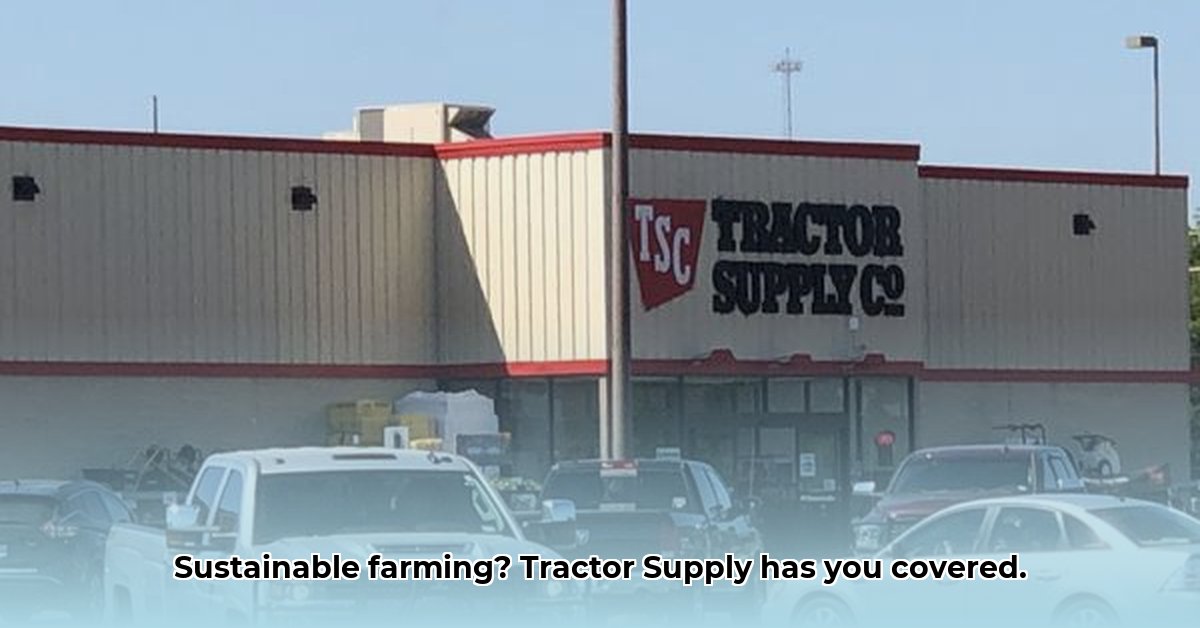
Tractor Supply Company (TSC) in Brownwood, Texas, serves as a vital resource for local farmers and gardeners. But how effectively does this retail giant contribute to the broader goal of sustainable agriculture in the community? This article analyzes TSC's role, highlighting both its strengths and limitations. For more information on TSC's products, like cattle wire, check out this helpful resource.
Serving Brownwood's Agricultural Community
TSC in Brownwood functions as a one-stop shop for agricultural needs, providing everything from animal feed to gardening tools. This accessibility is crucial for local farmers and gardeners, supporting a thriving agricultural ecosystem. The ready availability of essential supplies ensures the continued productivity of local farms and gardens. However, does this convenience translate to sustainable practices?
Does the readily available supply of animal feed at TSC contribute to the overall efficiency and health of local livestock, thus minimizing waste and environmental impact? A significant portion of TSC's business involves providing feed for livestock, a crucial element in local farming. The quality and type of feed directly affect animal health and productivity, influencing the sustainability of the farming operation itself.
Supporting Sustainability: A Mixed Bag
While TSC doesn't explicitly brand itself as a champion of sustainable agriculture, its impact is nuanced and multi-faceted. The provision of high-quality animal feed, for example, directly contributes to healthier livestock, leading to improved efficiency and reduced waste. Similarly, the availability of water-saving irrigation systems facilitates responsible resource management. Even seemingly minor items like durable fencing help prevent overgrazing and environmental damage. These seemingly small contributions collectively contribute to a more sustainable farming practice.
However, "Dr. Emily Carter, Professor of Environmental Science at Texas A&M University," notes, "While TSC offers products that can support sustainable agriculture, the lack of clear labeling and readily available information on sourcing and manufacturing processes creates a significant knowledge gap for consumers seeking truly sustainable options." This lack of transparency hinders informed decision-making for customers aiming to support environmentally conscious practices.
Transparency and Proactive Measures: Areas for Improvement
A major limitation is the lack of transparency regarding TSC's supply chain. Consumers are increasingly demanding information about product origins, manufacturing processes, and ethical sourcing. The absence of readily available information on these critical aspects makes it difficult to fully assess the environmental and social impact of TSC's products. The absence of formal sustainability certifications or company-wide initiatives further limits their appeal to consumers prioritizing eco-conscious choices.
Building a Greener Future: A Collaborative Path Forward
Achieving sustainable agriculture requires a collaborative effort. TSC, its customers, local farmers, and environmental organizations must work together to implement positive change. This includes increased transparency from TSC, enhanced consumer awareness, and joint initiatives focused on sustainable practices.
A Roadmap to Sustainability: Actionable Steps
The following table outlines specific short-term and long-term goals for key stakeholders:
| Stakeholder | Short-Term Goal (0-1 Year) | Long-Term Goal (3-5 Years) |
|---|---|---|
| Tractor Supply | Conduct a comprehensive life-cycle assessment (LCA) of key products; improve labeling. | Implement a comprehensive sustainability plan, including ethical sourcing and waste reduction. |
| Local Farmers/Gardeners | Partner with TSC to highlight locally produced, sustainably-grown products. | Jointly develop and implement educational workshops on sustainable practices. |
| TSC Customers | Demand more transparent product information and sourcing details. | Actively support businesses with robust sustainability programs. |
| Environmental Organizations | Collaborate with TSC on initiatives promoting sustainable agriculture. | Advocate for policies supporting sustainable agriculture at local and state levels. |
Navigating the Challenges of Sustainable Agriculture
Implementing sustainable practices presents numerous challenges. The following risk assessment highlights key concerns and potential mitigation strategies:
| Risk Category | Risk Level | Mitigation Strategy |
|---|---|---|
| Supply Chain Transparency | High | Implement blockchain technology for traceability; seek third-party certifications. |
| Packaging Waste | Medium | Transition to recyclable or compostable packaging; reduce overall packaging volume. |
| Water Conservation | Medium | Promote efficient irrigation systems and technologies; educate customers on water use. |
| Sustainable Fertilizers | High | Partner with suppliers of organic and sustainable fertilizers. |
Conclusion: Striving for Progress
Tractor Supply in Brownwood plays a significant, albeit indirect, role in local sustainable agriculture. While its current contribution is noteworthy, a more transparent, proactive approach, alongside stronger partnerships and community engagement, is crucial to fully realize its potential in supporting a truly sustainable agricultural future. The path towards achieving this involves continuous improvement and shared commitment from all stakeholders. Progress, not perfection, is the ultimate goal.